Support, guidance & advice for todays primary carers
Finding Disability Information, Services
and Support You Can Trust

Article by
Department of Health Disability and Ageing
Adjust text size:
Disability Gateway helps people with disability, their families and carers find the information, services and support they need in Australia.
Disability Gateway is a free national service funded by the Australian Government. The service assists people with disability, their families, and carers in finding trusted local information, services, and support through the Disability Gateway website and phone line.
The website is easy to use and provides a powerful search function to sort through information and find services in areas of life such as health, housing, employment, transport and everyday living. Whether you are looking for information or services for yourself, or for someone you care for, Disability Gateway is a great place to start.
Case study: Meet Kimberley and Mike
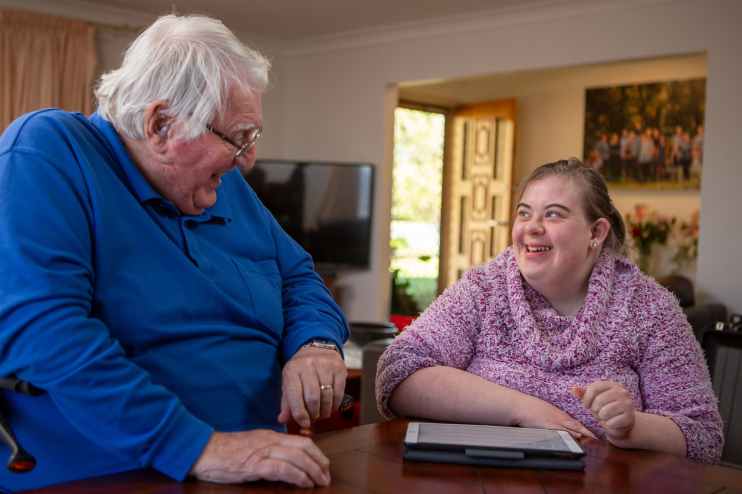
Kimberley has down syndrome, Mike, her dad, helps care for her. Becoming independent is important to Kimberley who volunteers at an equestrian centre, feeding and grooming the horses.
Kimberley also enjoys dancing, film production and craft classes. Mike is her transport to these activities but is finding this harder as he gets older.
“[Kimberley]’s very active. She does dancing; she does film production, craft classes; she does all sorts of things.”
“As I’m getting older, I find it harder to drive and we have been Kimberley’s form of transport.
Through Disability Gateway, Mike has been able to find local transport for Kimberley so she can keep doing what she loves and maintain her independence. Easy to find information on local transport, is just one area of life our website provides information on.
A wealth of information
The Disability Gateway website is conveniently organised into 10 areas of life with information on:
Income and finance: financial and tax support, family and carer supports, subsidised health services and treatments, financial planning and information on cards and concessions.
Employment: employment training, finding and keeping a job, employment rights and how to deal with employment discrimination.
Aids and equipment: government programs and organisations that provide equipment, communication aids and services, assistance animals and how to use technology to stay connected.
Housing: different types of housing, both independent and supported, rental assistance and housing rights.
Transport: public transport and discounts, community transport, taxis and rideshare services and information relevant to driving and parking private vehicles.
Health and wellbeing: gender and sexuality, healthcare services, respite care as well as tips and tools on staying physically and mentally healthy.
Everyday living: support with daily tasks like cleaning, shopping, meal delivery and life skills to support independent living.
Education: rights and options for early childhood, primary, high school and tertiary education.
Leisure: building and maintaining social connections, competitive and recreational sports, community recreation programs and taking holidays.
Rights and legal: understanding the rights of a person with disability, legal services specialising in disability law, advocacy and planning for the future. Our interactive website makes finding local and online supports in these areas easy.
If you can’t find what you are looking for on our website, help is just a phone call away. The Disability Gateway phone service is available from Monday to Friday, 8am to 8pm (AEDT / AEST) 1800 643 787.
Case Study: Meet Wendy
Wendy has worked as a Community Services Consultant with Disability Gateway since 2021. Her passion is making a difference in someone’s day by being a voice with lived experience on the other end of the phone.
“I love that we can help people,” she continues. “My proudest moments are when callers share how they felt there was no one listening to them until they contacted the phone line and we took the time to listen and reassure them.”
“We hear a little bit about their story, what they are looking for and there’s never a closed door, whatever they need, we’re here to help,” Wendy says.
Wendy was diagnosed with Multiple Sclerosis in 1986 and has spent her life always trying to maintain a positive outlook, taking the good days with the more challenging ones.
For Wendy, the Disability Gateway phone line is her way of giving back and finding fulfilment through everyone she speaks to. “The internet can be a bit of a minefield for finding the support you need, it’s so great to have a platform that’s easy to use, and a phone line where the team is always willing and ready to help,” she says.
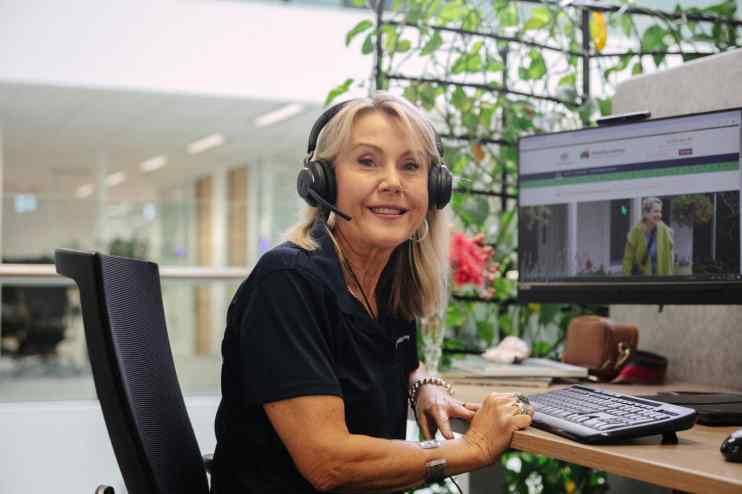
A key feature of Disability Gateway is its accessibility. Visitors can use ReadSpeaker to listen to the website, access translation services to listen to information in language or if they have difficulties with speaking or hearing, the National Relay Service can help.
Case Study: Meet Fiona
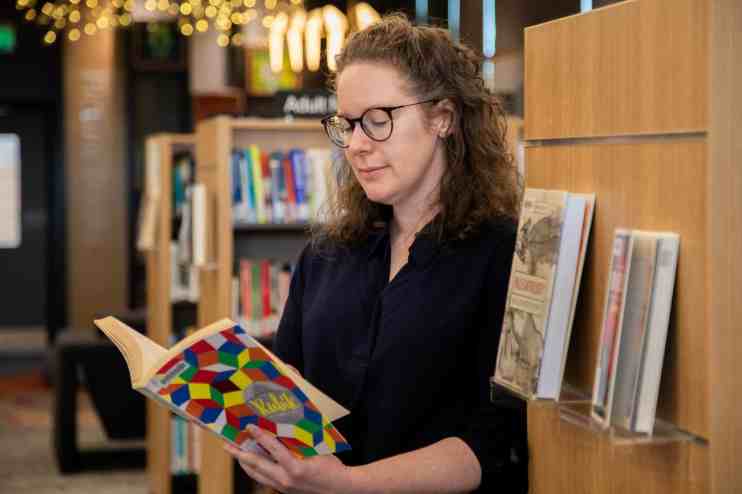
Fiona was diagnosed as profoundly deaf in her left ear when she was six but spent the next twenty years hiding her deafness.
She explains, “I developed a lot of strategies to manage my disability, to the point where most people didn’t even realise I was deaf.”
It was only when she started to experience hearing loss in her right ear, that Fiona began to process her disability. This journey eventually led her to write a memoir about how and why she hid her deafness.
Aside from her writing, Fiona also works full time in health care. Her days are made up of meetings, so she’s found ways to keep her energy levels up.
“Lip reading is an incredibly physical experience, you’re listening with your whole body which is very tiring,” Fiona explains.
When she explored the Disability Gateway, the navigation of the website was something that particularly stood out to Fiona.
“It is so rare to find a website that is truly accessible,” she says. “The layout of the Disability Gateway is easy to navigate and there are different accessibility functions. It just makes finding information a lot easier.” Fiona adds, “It feels like people with disability are truly embedded throughout the website, which gives you a sense of trust and confidence in the resources.”
Accessing Disability Gateway
Find reliable information when you need it most at disabilitygateway.gov.au or call 1800 643 787 Monday to Friday, 8am to 8pm to talk to a Disability Gateway staff member.
If it is hard for you to hear or speak, you can call the National Relay Service on 133 677 and ask to be connected to the Disability Gateway.
If you need support in a language other than English, the Translating and Interpreting Service (TIS National) can help. You can call the Disability Gateway on 1800 643 787 and ask for an interpreter or TIS National on 131 450 and ask them to connect you to the Disability Gateway.





Sep. 01, 2026
The Quiet Heart of Australia
Celebrating our Unpaid Family Carers
Jun. 01, 2026
Finding Disability Information, Services
and Support You Can Trust

Mar. 23, 2026
Prepare now for flu season

Sep. 01, 2025
The Heart Behind The Carer:
Celebrating our 3 Million Informal Carers

Sep. 01, 2025
5 Steps to Take if You’ve Lost Money to a Scam