Support, guidance & advice for todays primary carers
The Modern Granny Flat
Article by
Australian Carers Guide
Adjust text size:
As we move through 2026, the Australian housing landscape continues to evolve. One of the most significant shifts in recent years has been the reimagining of the “granny flat.”
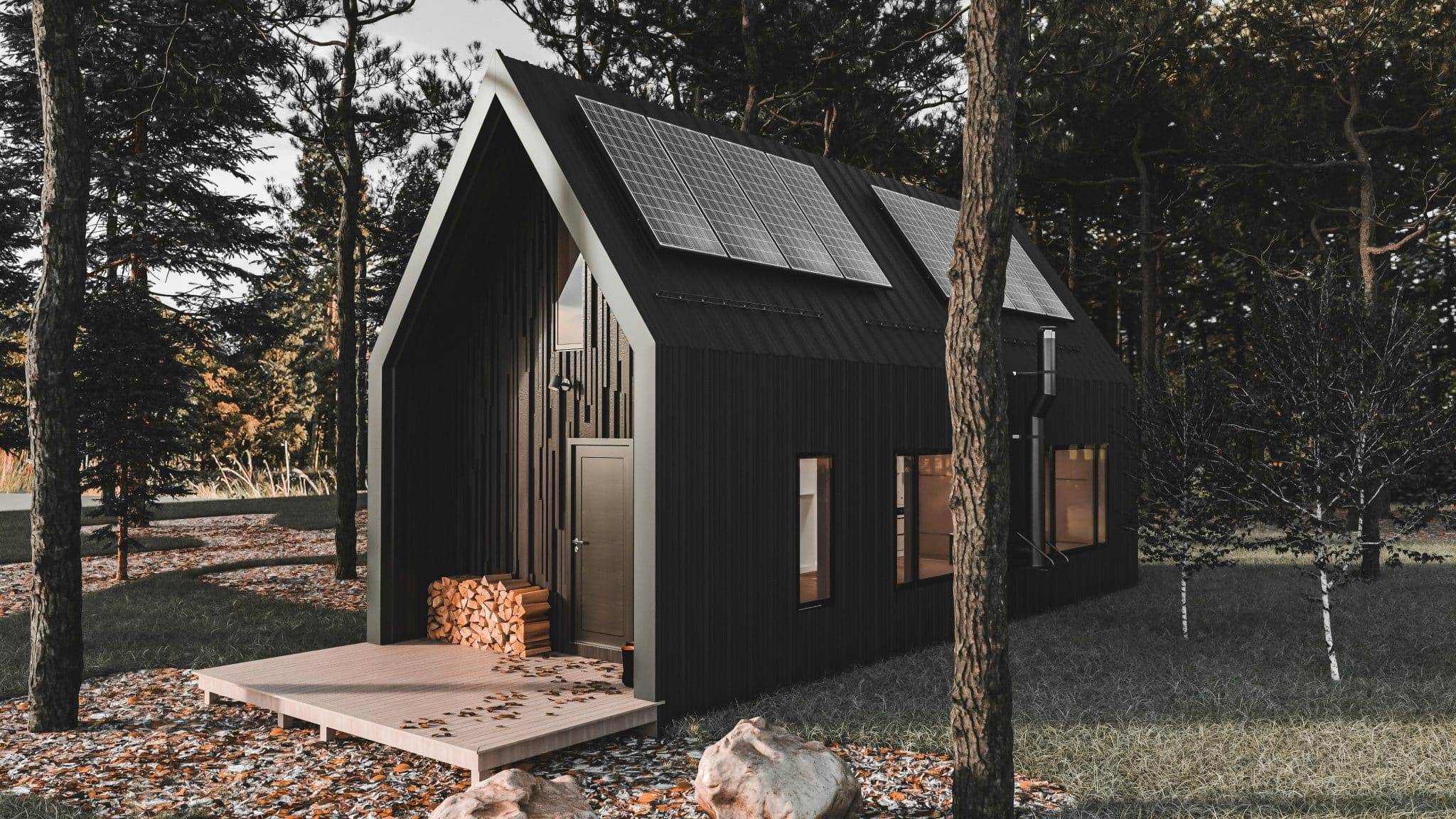
Once viewed as a simple, movable bungalow in the backyard, the modern granny flat, or Small Second Dwelling (SSD), has become a sophisticated, self-contained architectural solution for seniors looking to downsize without leaving the family property.
Whether it is to be closer to grandchildren, to have a dedicated space for a Carer, or to unlock the equity in a family home, building a granny flat is a strategic lifestyle choice. This article provides a comprehensive overview of the benefits, legalities, costs, and essential contacts for those considering this path in 2026.
Navigating the Legal Landscape in 2026
The rules for building a granny flat have been significantly relaxed in many parts of Australia to help combat the housing shortage. However, the legalities remain state-dependent and council-specific.
THE “NO SUBDIVISION” RULE
It is vital to remember that a granny flat remains on the same title as the main house. In 2026, it is still generally illegal to “subdivide” and sell off the granny flat separately. If the property is sold, both dwellings are sold together.
THE “GRANNY FLAT INTEREST” AND CENTRELINK
For those receiving the Age Pension, the way you fund the build is critical. Centrelink has specific rules regarding the Granny Flat Interest (GFI).
A GFI is created when you “exchange” assets (like the proceeds from your home sale) for a lifetime right to live in a secondary dwelling on someone else’s property.
• The Gifting Rule: Usually, if you give away more than $10,000 a year, it affects your pension. However, if you pay for the construction of a granny flat on a child’s land, Centrelink often does not count this as a “gift” because you are receiving a “life interest” in return.
• The Reasonableness Test: If you pay significantly more than the cost of the build, Centrelink may apply a “reasonableness test” to ensure you are not simply trying to hide assets.
• Formal Agreements: It is a requirement in 2026 that these arrangements be documented in writing to protect both the senior resident and the homeowner.
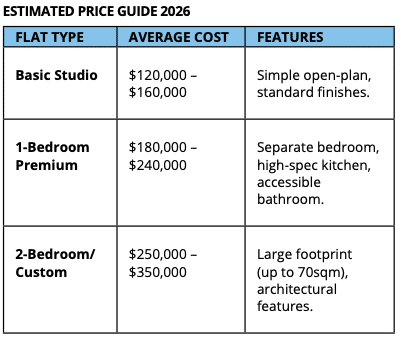
COSTS AND BUDGETING FOR 2026
Construction costs have stabilised since the volatility of the early 2020s, but building a high-quality home in a backyard remains a significant investment.
HIDDEN” COSTS TO FACTOR IN
1. Site Preparation: Levelling a sloping block or removing trees can add $10,000 to $20,000.
2. Service Connections: Running separate electricity, water, and sewerage lines from the street or the main house.
3. Council Contributions: Some councils charge “infrastructure levies” even for small dwellings.
4. Land Tax: In some states, if the granny flat is used for a non-family member, you may lose a portion of your Principal Place of Residence (PPR) land tax exemption.
CAPITAL GAINS TAX (CGT) EXEMPTION
One of the best pieces of news for families in 2026 is the continuation of the CGT exemption for granny flat arrangements.
Previously, if a child allowed a parent to live in a granny flat in exchange for a financial contribution, it could trigger a “taxable event.” Since 2021, the ATO has exempted these arrangements from CGT, provided they are:
1. In writing.
2. For a person of pension age or with a disability.
3. Not commercial in nature (i.e., not a standard market-rate rental agreement).
This allows families to formalise their caring arrangements without the fear of a massive tax bill when the property is eventually sold.
Who to Contact to Get Started
Building a granny flat is a multi-step process that involves planning, legal, and financial expertise.
• A Specialist Granny Flat Builder: Do not just hire a general renovator. Specialist builders understand the specific “Small Second Dwelling” codes and often have pre-approved designs that fly through the permit process.
• An Elder Law Solicitor: To draft the “Granny Flat Interest” agreement. This protects your right
to live there even if your children decide to sell the house or go through a divorce.
• Financial Information Service (FIS) Officer: Contact Services Australia (Centrelink) and ask to speak to an FIS officer. They can explain exactly how the money you spend will affect your Age Pension.
• Local Council Planning Department: Most councils have a duty planner who can tell you over the phone if your block is eligible for a secondary dwelling.
The granny flat of 2026 is a far cry from the cramped “sheds” of previous generations. They are now modern, accessible, and stylish homes that offer a dignified way to age in place while staying connected to family. By understanding the legal requirements and setting up a formal agreement, you can ensure that this transition provides both the senior resident and their family with peace of mind and financial security for years to come.