Support, guidance & advice for todays primary carers
Protecting The Family Jewels
Article by
Jean Kittson
Adjust text size:
At the end of my last column I said that my next column was going to be about finances. My least favourite topic.
To me financial experts, and their financial moves and manoeuvers, juggling and jargon, might as well be talking in Klingon for all I understand. It is not their fault. It is often the mindbogglingly complex and always-changing rules and regulations around tax that keeps them both employed and possibly sleepless.
It seems to me that each announcement of new rules and regulations is aimed at extracting as much money as possible from older people. Which means we have to wise up.
These regulations may be couched in soothing words about what they might pay you, but it often comes down to what you must pay them.
These calculations often seem to be based on the assumption that because we may live in a million-dollar house we are millionaires. In fact, the house doesn’t make us rich. Just because our house is rolling in it doesn’t mean we are. Our house might be able to fly to Rome at the drop of roof tile but doesn’t mean we can. We may only have the money for sausages once a week.
Let’s not forget, the house got expensive because all homes have got insanely expensive due to one or two tiny flaws in government planning.
Yes, we can sell the family home and downsize to a smaller home, but this puts us in competition with young first home buyers and the whole process becomes expensive for everyone. Do not even
mention stamp duties.
Let’s also not forget that our Super and whatever we get for the family home might
be already depleted because we have helped the kids to afford mortgages. This is the bank of mum and dad, the only bank that loses money, all for a good cause – if done properly with the right legal
and financial advice. But good intentions without good advice can be a financial, emotional and psychological disaster.
If you are alarmed, my work here is done.
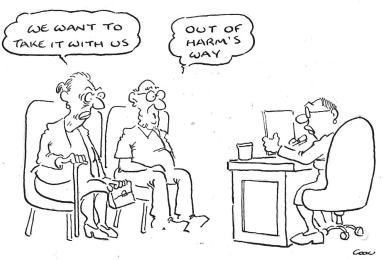
INFORMED DECISIONS
Remember, nearly every decision we make about ageing will come with a financial component. While we may understand what we should be paying for potatoes, we might not fully understand how our electricity is costed, let alone where our super actually is, how to access it, and what happens if we use it for the kids.
Then there is the question of what happens if we decide to sell the family home to top up our super and buy into a retirement village. What are those costs? What happens if one of us needs care? With all the costs associated with home care and residential aged care, where will that money come from? These are night thoughts: the ones that keep you awake at night, only the answer is never clear in the morning.
Crunching all these numbers is not even a question of maths. I was good at maths at school and I can still add up without using my fingers, but it doesn’t help. It is about regulations and rules, taxes, tests and assessments. 2 plus 2 does not equal four. In certain situations, two plus two can equal one. So please be careful.
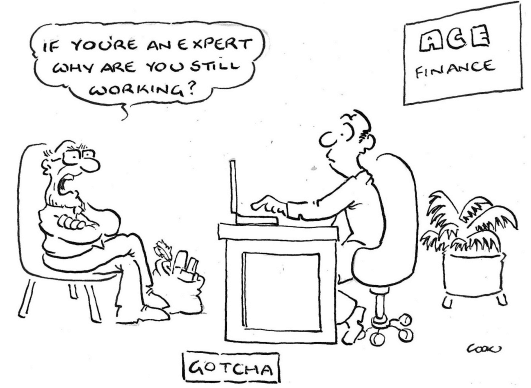
Get the right informed advice from a trusted expert. It can save you so much money in the long run.
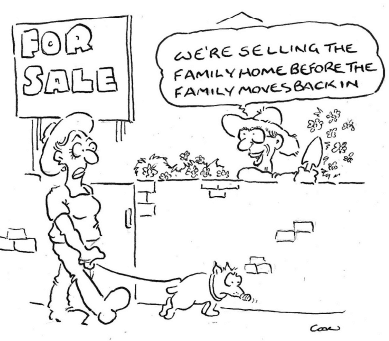
THEFT
Protecting your assets and making the right financial decisions also applies to protecting yourself or your loved ones from falling victim to scams.
Every cyber-crime expert will beg you to use strong passwords so that you can’t be hacked.
They suggest a familiar phrase that can be broken into three.
For example: Everyday I walk up the hill and catch the bus to my favourite coffee shop.
You then divide your phrase into three;
Everyday I walk up the hill
And catch the bus
To my favourite coffee shop.
Sometimes passwords make you use numbers. So just put a number at the end of each phrase 1 then 2 then 3. If you need a capital letter put it at the start. If you need a symbol pop a $ on the end. (We are talking finances.)
Then you only ever use any one of these phrases for your passwords.
If you forget which phrase you used, it doesn’t matter because you only have a choice of three and can always try three times before you are locked out.
(You could even take the first sentence of a book and divvy it up. Then you will only have to remember which book. Not Pride and Prejudice. The first sentence divides beautifully into three, but the sentence is universally known, even to scammers.)
Imagine not having to write down dozens of secret passwords in a little notebook you keep safe in the drawer next to your computer. Pretend I didn’t tell you that.
There is not only hacking to worry about, there is also a cornucopia of scams!
Billions of dollars a year are lost to scams. There are romance scams which often prey on people who are lonely or isolated. There are investment scams whose promised returns are too good to be true! Sometimes they seem to be endorsed by celebrities or respected business people. They are often fake endorsements.
There are also scams where a fake business is set up and a fake invoice and it looks like you are paying the right people but you may not be.
Sometimes emails offer you money. All you need to do is provide your bank account details!
Always triple check details. Look for typing errors in the email address. Or email addresses that have no relation to the people asking for payment. I recently received a spate of emails from Google saying my cloud storage has run out and I had to pay for more. It looked thoroughly genuine but then I looked at the email address and it was just a random collection of letters and numbers. I was still worried about running out of storage this is how they get to you, there is urgency and fear, so I rang our computer expert and asked what he thought. He said scam, delete.
Always get a second opinion if in doubt. If you have been scammed, you need to report it to the police, even though there can be intense feelings of shame and guilt. That is often why the scammers get away with it. Being a victim of crime can increase feelings of loss and vulnerability. Have regular conversations about scams with family and friends to keep alert and up to date. Scammers use highly sophisticated psychological and emotional devices to manipulate. Even highly alert people get conned. You are not alone.
Just remember, scams usually start with a phone call or an email. Often they say they are alerting you to a scam, that you have been hacked, that someone tried to use your credit card and they are there to help.
If you are not sure but you are extremely polite and don’t want to be rude by telling them to try some other sucker, you can say “you called at the right time the police are here I will put you on.” I have no idea whether that would work. Just don’t say anything, they will have a convincing reply to anything you might say. Just hang up.
When in any doubt, delete, hang up, no matter how urgent it sounds.
Then go and see someone in person if possible, if they are pretending to be Australia Post for example, or look up the correct phone number and make your own inquiry.
THE UPSIDE OF YOUR FINANCES
Have you looked into all the discounts, deductions, concessions and subsidies for which you or your loved one may be eligible?
If you have too much income or too many assets to qualify for a pension or a part pension, you might still be eligible for Commonwealth Seniors Health Care card.
Only your income is taken into account for this card. If you earn under $101K for singles or under $161 K for couples then you might qualify. I got these figures from the government website and they are approximate, but the point is – if you think you might qualify then please apply. The discounts will save you a lot of money. Not only do you get discounted health care like bigger Medicare refunds and cheaper prescription medications through the Pharmaceutical Benefit Scheme (PBS) but you are also entitled to discounts on council rates, energy and water and public transport. There is also a $250 fuel voucher and if you have CHSC card and you live in a regional area, you may also be eligible for $250 annual travel card.
As always, my number one tip to crunch all your numbers and maximise your discounts is to get professional later-life financial advice from people who can look at your entire situation and be able to give you an overview of your finances or those of the person you are caring for, and all the ways you might be able to maximise your entitlements. Be aware that an overview of what you have and what you qualify for should only cost a few hundred dollars not a couple of thousand.
Happy Hunting!