
Support, guidance & advice for todays primary carers
Once in a generation, aged care reforms

Article by
Australian Carers Guide
Adjust text size:
And what the aged care reforms mean for you
The Albanese Government will deliver historic aged care reforms to ensure the viability and quality of aged care, and support growing numbers of older Australians choosing to retain their independence and remain in their homes as they age.
Around 1.4 million Australians will benefit from a new Support at Home program by 2035, helping them remain independent, in their home and their community for longer.
$5.6 billion will be invested in an aged care reforms package which represents the greatest improvement to aged care in 30 years, and includes these major changes:
- A $4.3 billion investment in Support at Home, to come into effect on 1 July 2025.
- Essential changes to improve the funding, viability, and quality of residential aged care.
- A no worse off principle will provide certainty to people already in aged care and they won’t make a greater contribution to their care.
- The treatment of the family home won’t change.
- New laws to protect older Australians in aged care, with stronger powers to investigate bad behaviour and civil penalties for breaching standards
The net impact of the changes is a $930 million spend over four years and a $12.6 billion save over the next 11 years.
The aged care reforms respond to the recommendations of the Aged Care Taskforce, which brought together older Australians, experts and residential aged care providers and recommended that Australians make a reasonable means tested contribution to the cost of their care.
Older Australians increasingly want the freedom, support and choice to remain in the home and community they love. In the past 10 years, the number of Australians in home care has increased fourfold.
To cater to the changing preferences of older Australians, the Albanese Government will invest $4.3 billion in a new system of home care, called Support at Home, which will come into effect on 1 July 2025, and will help Australians remain independent, in their home and their community for longer.
By 2035, Support at Home will help around 1.4 million people stay in their homes as they age.
Support at Home will provide support for:
- Clinical care (e.g. nursing care, occupational therapy)
- Independence (e.g. help with showering, getting dressed or taking medications)
- Everyday living (e.g. cleaning, gardening, shopping or meal preparation)
The Government will pay 100 per cent of clinical care services, with individual contributions going towards independence and everyday living costs.
| Classification level | ||
| Medium (budget around $22,000) | Highest (budget around $78,000) | |
| For every $1 contributed by a… | the Government will contribute, on average… | |
| Full pensioner | $12.70 | $19.80 |
| Part pensioner | $6.10 | $8.50 |
| Self-funded retiree and Commonwealth Seniors Health Card eligible | $1.60 | $2.20 |
How much someone contributes will be based on the Age Pension means test and highly dependent on their personal circumstances, from the level of support they are assessed to need, to their combination of income and assets.
Click here to see how different Australians would contribute to Support at Home.
A lifetime contribution cap will apply across the aged care system and means no one will contribute more than $130,000 to their non-clinical care costs – whatever their means or duration of care – with every Support at Home contribution counted towards the cap.
Some of the benefits of Support at Home include:
- Support for 300,000 more participants in the next 10 years.
- Shorter average wait times from assessment to receive support.
- More tailored support, with 8 ongoing classifications all the way up to around $78,000 a year.
- Support for home modifications, with up to $15,000 to make homes safer.
- Fast access to assistive technology, like walkers and wheelchairs, including a new equipment loan scheme.
Support at Home participants will also have expanded access to restorative support to get back on their feet after an illness or injury, through a 12 week program that works with a team of allied health and other professionals.
According to the Productivity Commission, up to 70 per cent of Australians would prefer to die in the comfort of their own home, but fewer than 10 per cent actually do. Support at Home participants will be eligible for up to $25,000 in additional support to spend their final 3 months at home, so they can be surrounded by loved ones in an environment they cherish, instead of rushing precious moments into hospital visiting hours.
Click here to learn more about Support at Home.
Essential changes to improve the funding, viability, and quality of residential care
As the Aged Care Taskforce Report made clear, by 2050 the residential aged care sector will need $56 billion in capital funding to upgrade existing aged care rooms and build the additional rooms that growing numbers of older Australians will need.
In the next 40 years, the number of Australians aged over 65 is expected to more than double, with those aged over 85 to more than triple.
Current funding arrangements are not sufficient: in 2022-23, 46 per cent of providers made a loss from accommodation.
A range of aged care reforms will help ensure residential aged care providers can attract the investment they need to keep current facilities open, improve quality, and build new facilities.
As recommended by the Aged Care Taskforce, these measures include:
- Larger means-tested contributions from new entrants.
- A higher maximum room price that is indexed over time.
- The retention of a small portion of refundable accommodation deposits by providers.
The treatment of the family home won’t change.
Half of new residents will not contribute more under the new consumer contributions:
- All “fully supported” residents will not contribute more.
- 7 in 10 full pensioners will not contribute more.
- 1 in 4 part pensioners will not contribute more.
For every $1 an older Australian contributes to their residential aged care, the Government will contribute an average of $3.30.
Read more about how accommodation reform and resident contributions will ensure the growth and viability of residential aged care.
Click here to see how different Australians would contribute to their residential care.
No worse off principle for Australians already in aged care
A no worse off principle will provide certainty to people already in aged care and they won’t make a greater contribution to their care.
Support at Home
When Home Care participants transition to Support at Home, from 1 July 2025, they will maintain the same level of funding and retain any unspent funds.
Everyone who, as of 12 September 2024, is receiving a Home Care Package (a package), on the National Priority System, or assessed as eligible for a package, will make the same contributions, or lower, as they would have under Home Care arrangements. They will stay on the existing contribution arrangements when they move to residential care, unless they opt to move to the new program
Residential aged care
The new contributions and accommodation arrangements will only apply to new entrants to residential aged care from 1 July 2025. Everyone in residential care on 30 June 2025 will maintain their current arrangements until they leave care.
Budget impact
Aged care is one of the biggest pressures on the Budget and, without action, spending is expected to more than double as a share of GDP over the next 40 years.
The Government currently pays 76 per cent of residential care costs and 95 per cent of home care costs.
This package improves aged care and strengthens the Budget at the same time. It is a combination of new investments and new contributions but with generous transitional arrangements.
The net impact of the changes is a $930 million spend over four years and a $12.6 billion save over the next eleven years.
As a result of the aged care reforms, by 2034-35:
- Annual growth in spending on aged care is expected to moderate. Average annual growth over the decade to 2034-35 was 5.7 per cent at Budget and will come down to 5.2 per cent.
- Aged care spending as a share of GDP is projected to moderate, from 1.5 per cent of GDP to 1.4 per cent, even as the number of participants and the quality of care increase.
Government investment in aged care will continue to grow, year on year, every year, growing more sustainably over time.
Under the aged care reforms, the Government will pay:
- 100 per cent of clinical care costs, regardless of individual means, and
- The majority of aged care costs overall, including:
- 73 per cent of residential care costs and
- 89 per cent of Support at Home costs.
For every $1 an older Australian contributes, the Government will contribute an average of $3.30 to residential care, and $7.80 to Support at Home.
New laws to protect the rights of older Australians.
The new Aged Care Act legislation, which will enable the aged care reforms, will soon be introduced to Parliament. It includes:
- A Statement of Rights for older Australians in aged care, with a positive duty for providers to uphold those rights.
- New duties to hold providers and people in positions of leadership accountable, along with a compensation pathway.
- New Quality Standards to drive continuous improvement and high quality care.
- Stronger regulatory powers to protect people from harm.
- New whistleblower protections.
- A regulator with stronger investigative powers.
- A new, independent statutory Complaints Commissioner.
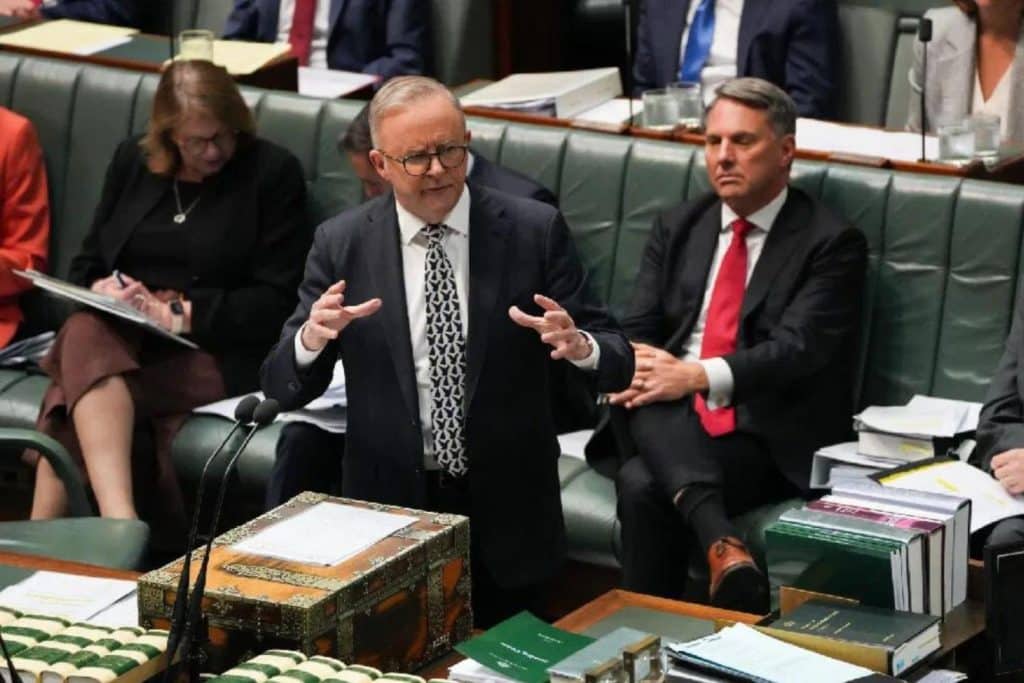
Quotes attributable to Prime Minister Anthony Albanese:
“At the heart of my government is a simple principle: putting the “care” back into aged care.
“Older Australians built this country, shaped our economy, did the hard yards. They embody the strength and the spirit of our nation.
“Our government is working to ensure that the aged care system that supports them is stronger now and sustainable into the future.
“Reforms like this do not happen every day. They are once-in-a-generation, and my Government is proud to deliver them, as we said we would.”
Quotes attributable to Treasurer Jim Chalmers:
“This is how we Budget for better care.
“This is how we fund the care Australians need and deserve as they age.
“This is how we improve aged care and strengthen the Budget at the same time.
“These reforms are all about delivering better care for more people in a more sustainable way.
“It’s a step change in care, and a structural reform to the Budget.”
Quotes attributable to Minister for Aged Care Anika Wells:
”We’ve heard the message from older Australians: they want support to stay in the homes and communities they love.
“Support at Home will help around 1.4 million older Australians do just that, with shorter wait times, more levels of support, and funding for home modifications.
“The Government will pay 100 per cent of clinical care services, with people contributing towards their support services like help with showering, gardening or meal preparation.
“Older Australians will get support to spend their final weeks at home, surrounded by loved ones in an environment they cherish, instead of rushing precious moments into hospital visiting hours. Listen

Comments

































Why wait until july. Things are needed now. I went onto home care and nothing could be done until 3 to 6 months away.cleaning service was not that thorough. I must wait until my yard is a jungle apparently.
The government is going to hit self funded retirees hard.I believe that was the intention from the start.The intended figures for independent support of the selfunded at home are appalling.
I have just read the Aged care examples of the ratios of funding.
It is an exercise in social engineering and in my view is a disgrace.
The self funded retirees are just being treated dreadfully.
Especially those who are separated by illness because they can no longer be cared for in their home.
The inclusion of the family home being part included in the means test for these unfortunates is just mean spirited and will be a real worry for say a wife with little income but is Assett rich because of her husband and income poor.
The so called $130,000.00 “cap” on fees is misleading as it is indexed each year,the same as it has been under the old scheme,so in effect only the super rich reach the cap.
From a money point of view all this is smoke and mirrors and is just cost shifting from Government to male retirees who happen to have a bigger Superannuation balance than their loved one ,but she will be lumbered with the worry of living at home and trying to pay the bills as all costs are pooled.
At the same time the person at home has to try and preserve the capital to pay the same rad as say her husband.
Very unfair to Aged people.
My darling has now passed but I am not giving up pointing out these real life worries.
The government and opposition are to be congratulated on “rights based “ legislation and congrats to the Libs for pushing for grandfathering the charges.
As usual with this government the self funded retirees who are the least drain on the system already, will be the ones penalised for saving for their retirement! This creates a situation where you might as well spend up before you reach retirement age!
All fluff and no substance – especially for self-funded retirees. Also, the food in aged care is not up to standard. That needs an overhaul.
You are what you eat. Albanese is clueless.
The system have to change NOW for the self retired people who worked the hardest to achieve something. They worked the hardest and on the end have nothing . No support from government not at all starting from child care high education everything paid pravitelly and on the end left behind with no support whatsoever . This have to be changed NOW. Government supports people who don’t work to achieve people who on drugs criminals but not support for people who paid for everything who paid the higher taxes and on the end gave nothing from government no pension no health care card no nursing home. Is worse than poorest country in the wold is disgusting is so bad
I would not have been able to purchase my new property without the assistance of HACK MAVENS CREDIT SPECIALIST, who aided me in removing all negative entries from my credit report and raised my score from 550 to 830+ across all three credit bureaus. Should you require his services, You can reach him via email at H A C K M A V E N S 5 AT G M A I L DOT COM or call/text/Whats-App at [+1 (2 0 9) 4 1 7 – 1 9 5 7]. You can thank me later.
I was diagnosed with Herpes four years ago. For over two years, I relied on prescribed medications and treatments, but unfortunately, my condition continued to worsen. The flare-ups became more frequent, the discomfort increased, and even simple daily tasks became difficult to manage.Last year, out of desperation and hope, I decided to try a herbal treatment program from NaturePath Herbal Clinic. Honestly, I was skeptical at first, but within a few months of starting the program, I felt some changes. My discomfort eased, my energy levels improved, and I felt I had more control over my daily life again.It’s been a meaningful experience for me, and I feel more like myself than I have in years. This is simply my personal story. You can visit their website at http://www.naturepathherbalclinic.com
whatsapp +27604189106
OPIPLJIVE INFORMACIJE O BOŽIĆNOM KREDITU ZA PLANIRANJE…
Ovo nije normalna objava koju svakodnevno vidite na internetu gdje ljudi daju lažne recenzije i lažne informacije o izvrsnoj financijskoj pomoći. Svjestan sam da su mnogi od vas prevareni i da su lažni agenti iskoristili one koji traže kredite. Neću ovo nazvati normalnim recenzijama, nazvat ću ovo situacijom u kojoj sam živi svjedok kako možete dobiti svoj kredit kada ispunjavate uvjete tvrtke. Zaista nije važno imate li dobar kreditni rejting ili odobrenje vlade, sve što vam treba je važeća osobna iskaznica i važeći IBAN broj da biste mogli podnijeti zahtjev za kredit s kamatnom stopom od 3%. Minimalni iznos je 1000 eura, a maksimalni iznos koji se može posuditi je 100.000.000 eura. Dajem vam 100% jamstvo da možete dobiti svoj kredit putem ove pouzdane i poštene tvrtke, posluju 24 sata online i pružaju kredite svim građanima Europe i izvan Europe. Poslali su mi dokument koji je provjeren i testiran prije nego što sam dobio kredit, stoga pozivam sve kojima je potreban kredit da ih posjete ili kontaktiraju putem e-maila: michaelgardloanoffice@gmail.com
WhatsApp za Europu: +38591560870
WhatsApp za SAD: +1 (717) 826-3251
Nakon što ih kontaktirate, javite im da vam je gospođa Dejana Ivica iz Zagreba dala informacije. Vidjeti znači vjerovati i zahvalit ćete mi kasnije kada dobijete kredit od njih. Dao sam obećanje da ću nakon što dobijem kredit od njih, objaviti dobru vijest svima online. Ako imate prijatelje ili rodbinu, uključujući kolege, možete im reći za ovu ponudu i da se događa ovog BOŽIĆNOG VRIJEME.